Tag: Mid-Career Professionals

  • The Second Income System for Mid-Career Professionals Who Don’t Want to Quit Their Job
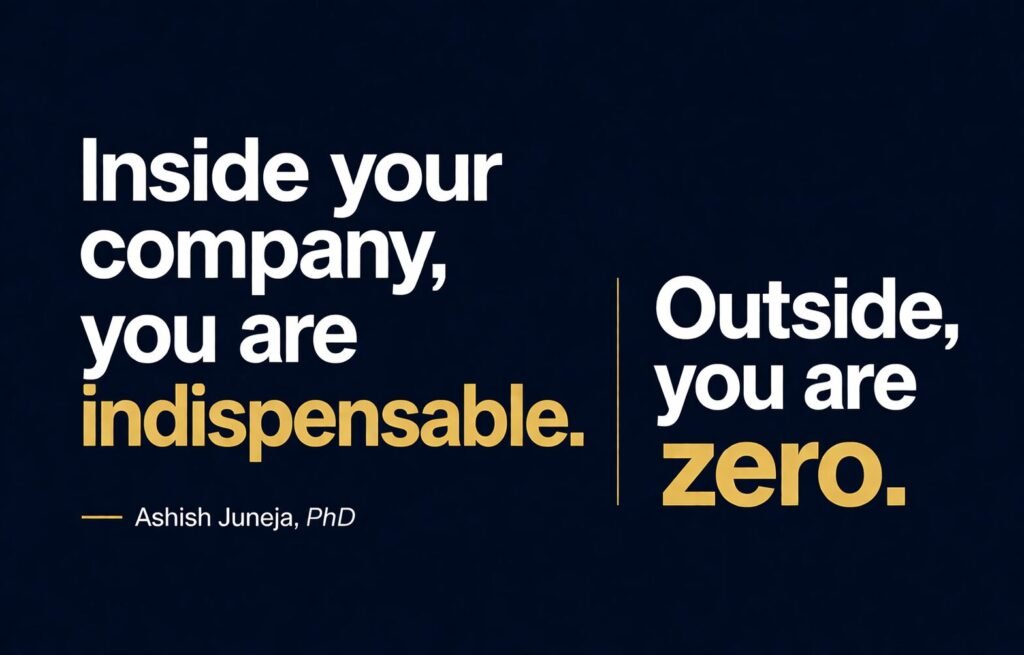
    The Second Income System for Mid-Career Professionals Who Don’t Want to Quit Their Job

    After so many years of work, the biggest problem still exists.

    You are dependent on a single employer, a single job, and your expertise.

    You do not lack knowledge, but you lack a system to turn that knowledge into income. Since the beginning of your career, the organization has trained you to focus on one specific segment or one specific skill.

    You might be part of Human Resources, Marketing, Finance, or the operations team, but you do not know the full picture. Only the CEO knows the full picture, which is why there is a risk-reward ratio. He is paid more, and you are paid less.

    If you solve bigger and larger problems, you are paid more, but if you solve small problems, you are paid less.

    A kindergarten teacher is paid far less than a corporate employee.

    I learned this the hard way, not once but twice. The first time was in 2020, when COVID struck and swept through my whole organization without seeking my permission.

    Second time on December 31, 2023, when a phone call ended my job.

    In both cases, I had expertise but no system. The moment the paycheck disappeared, I also disappeared.

    If you’re a mid-to-senior professional with 10, 15, or 20 years of experience, this post is the framework I wish I’d had before either of those collapses.

    The First Disappearance in 2020

    It was in 2020 that my coaching institute shut down overnight.

    I had scaled the institute to 1,000+. I believed I had built a flywheel and validated the model, but then COVID killed it. The moment institute was shut I was just another person looking for a job.

    I had all the expertise in me, but the vehicle that made my expertise visible and profitable vanished.

    I should have taken this as a wake-up call, but I was still asleep.

    The Second Disappearance: December 31, 2023

    In August 2023, I took a different route from academia and joined a non-academic setup because the owner himself wanted me on board, and it felt safe.

    On December 31, 2023, a phone call ended the job. It was New Year’s Eve. One simple call ended my job.

    This time, the blow was loud and hard. For a few days, I was thinking, “Why did it happen?” Silently, I prayed, “God, please do something so that no one can fire me.”

    I realized the problem was never my expertise. The problem was that I kept trading my expertise for a single paycheck I completely depended on.

    The moment the paycheck disappeared, I disappeared with it.

    This Isn’t Just My Story. It’s the Default Setting.

    If you’re reading this and you’re 10, 15, or 20 years into your career, you’re likely sitting in the exact same chair I was and the data is brutal.

    In just the first four months of 2026, over 90,000 tech employees globally lost their jobs. In India alone:

    • Oracle cut nearly 12,000 roles in a single morning
    • A Mercer report found 48% of Indian firms are shifting to project-based staffing models — meaning permanent roles are quietly disappearing even without layoff announcements

    The largest IT firm in India is laying off mid-career professionals with 20–25 years of experience, not freshers. The very people who thought their seniority was their shield.

    Why “Being Senior” Is No Longer Protection

    For 30 years, the career playbook was simple: Get a degree → get a job → become senior → become safe.

    That playbook is broken now. Today, 64% of Indian IT firms have integrated generative AI tools into their workflows. Mid-level managerial layers — the exact rung most experienced professionals occupy — are being compressed, automated, or restructured into project-based contracts.

    The people most at risk are not the junior ones. It’s the ones in the middle. The ones with deep expertise but no system to deploy it outside their employer.

    What a strange thing! You become more valuable to the market every year, but you stay more dependent on one employer every year.

    Your salary goes up, and your replaceability goes up faster.

    The Real Problem: Knowledge Without a System

    After my second job loss, I sat down and asked myself one honest question:

    Why do I – a PhD economics who scaled an institute to 1,000+ admissions keep ending up invisible?

    The answer wasn’t “not enough expertise.” The answer was: expertise without a system is invisible by default.

    Most mid-to-senior professionals have:

    • Deep domain knowledge
    • A strong network inside their company
    • A reputation among colleagues and clients
    • Years of frameworks, judgment, and pattern recognition built up

    What they don’t have:

    A way for the outside market to see that expertise

    • A packaged offer that the market can buy
    • A pricing model
    • A delivery system
    • A pipeline that runs without their employer

    So the moment the employer steps away, the expertise does not know where to go.

    The Digital Economics System: MIMO

    After my two systems collapsed, I created Digital Economics Hub. Inside the Digital Economics Hub, as part of the Digital Economics System, I have a process called MIMO— Market Intelligence → Market Offer.

    It’s deliberately simple because most professionals overthink this.

    Market Intelligence

    Understand what the real market actually wants — not what you think it wants from inside your head.

    When you look at what is happening in the market, you will be amazed. People are doing this exercise entirely in their imagination. They sit in their living room and decide what people will pay for, and then they’re shocked when nobody pays.

    Market Intelligence means going out and listening. What problems are people in your domain searching for? What are they paying others to solve? Where are they stuck? What language are they using to describe the pain?

    Market Offer

    Package your expertise into something the market will actually pay for.

    It is not a “side hustle.” It is a framework, a service, a cohort, a digital product, a consulting engagement, or A coaching program.

    The following are the steps you have to take:

    1. Go out in the market and have a discussion with people.

    2. Once you have made a list of the problems they are encountering.

    3. Once you have a list of problems, you can package the solution in the form of coaching, consulting, advisory, or a digital product.

    4. Offer the solution to the prospect.

    5. Get paid for the solution you offer.

    The Result

    Once you follow the process, you will have multiple revenue streams from the knowledge you already have. All this I am saying while keeping your job and not leaving.

    The best time to learn a new skill or build a system is when you have job safety or a cushion. Build your income that does not depend on one company keeping you around.

    This is what I mean by UNFIREABLE. It’s not arrogance, but it’s architecture.

    What the Numbers Say About People Who Build This

    This isn’t just my belief. The shift is already happening:

    Read that last point again. A second income doesn’t make you a worse employee. It makes you a calmer one. Because you’re no longer terrified of the next phone call.

    47 Mid-to-Senior Professionals Have Walked This Path With Me

    47 mid-to-senior professionals have completed my programs using this framework.

    They are from IT, Banking, Manufacturing, Teaching, and Consulting.

    Every single one of them already had the expertise. They didn’t need more knowledge. They needed:

    The system to package it. The clarity on who it’s for, the path to make it visible, and the pipeline to make it profitable.

      One of them — a manufacturing professional — applied MIMO and hit a 14–15% conversion rate on his offer. He started making money at the foundation level itself, before he even moved to the next stage.

      That’s what happens when expertise meets architecture.

      The Hard Truth Most People Won’t Tell You

      Your job feels secure — until you fear job loss. That fear isn’t paranoia. It’s pattern recognition. 2025 alone saw structural workforce reductions at almost every major Indian IT and tech company. This is not a downturn that will pass. This is the new shape of work. The only thing that makes you genuinely secure is expertise that the market can find, buy, and benefit from — independent of any one employer.

      That’s UNFIREABLE, not because nobody can fire you but because losing one income stream no longer means losing your livelihood.

      Where to Go From Here

      If you’ve read this far, you’re not looking for a side hustle. You’re looking for an architect.

      Here are two ways to take the next step:

      1. Get the MIMO framework (free). Subscribe to my newsletter, and I’ll send you the complete Market Intelligence → Market Offer breakdown — the same framework I use with every client. You’ll get one email a week on building parallel income from corporate expertise. No fluff, no recycled “10 side hustle ideas” lists.

      Subscribe to the newsletter

      2. Talk to me directly if you’ve already validated demand and you’re ready to build the system — pricing, offer, delivery, pipeline — book a discovery call. We’ll spend 30 minutes mapping your specific path. No pitch. If it’s a fit, I’ll explain how my programs work. If it’s not, you’ll leave with clarity either way.

      Book a discovery call

      Ashish Juneja, PhD (Economics) — India’s Digital Economics Coach. I help mid-to-senior corporate professionals build parallel income systems while staying employed.

    1. The Economic Trap of Single-Income Dependency

      The Economic Trap of Single-Income Dependency

      How Experienced Professionals Escape It Without Quitting Their Job)

      You’re not afraid of losing your job.

      You’re afraid of losing your salary.

      Your salary is deposited into your bank account on a specific date.

      Very much Predictable, reliable, and certain.

      You work for 30 days without thinking about it — and then it lands.

      With this predicatability it is normal to have

      Your EMIs. Your lifestyle. Your child’s school fees. Your peace of mind.

      Everything is tied to that one event – salary credit.

      Without realizing it, your entire psychological stability becomes dependent on a single source of income.

      This is not a motivation problem.

      This is an economic structure problem.

      Let’s break it down clearly.

      The Illusion of Salary Security

      Most experienced professionals believe they are secure because they are employed.

      But employment and security are not the same thing.

      Employment is a contract, and security is a structure.

      Your salary feels stable because:

      • It comes on time.
      • It requires no marketing.
      • It requires no selling.
      • It requires no uncertainty.

      You exchange time and expertise, and your organization absorbs market risk.

      The mutual arrangement gives you comfort.

      The deeper issue is that your lifestyle is built on a single-point dependency.

      If that one stream pauses, everything shakes.

      That is why the “what if?” loop begins.

      • What if restructuring happens?
      • What if performance ratings drop?
      • What if AI replaces the function?
      • What if the company pivots?

      Have you noticed something?

      You are not anxious during work hours.

      You are anxious on weekends because, when work stops, your mind replays its dependence.

      The salary feels certain, but the organization is not.

      Slowly, without you realizing it, security becomes an illusion.

      To protect your salary

      You overdeliver.

      You tolerate what you normally wouldn’t.

      You avoid risks you are capable of taking ot because you lack skill, but because dependency replaces control.

      The Psychological Cost of Single Income

      The real cost of single-income dependency is not financial.

      It is mental.

      When your livelihood depends on one source:

      • You hesitate to speak.
      • You avoid visibility outside the company.
      • You delay building something of your own.
      • You postpone long-term moves.

      And you convince yourself: “Let me stabilize first.”

      But stability never feels enough because the system itself is fragile.

      Here is the hard truth: Job security is not financial independence.

      It is job protection.

      Protection exists as long as the organization needs you.

      Independence exists when income does not depend on a single decision-maker.

      As an experienced professional, you are capable and skilled, with 8–15 years of experience.

      But you are economically fragile.

      You say: “I don’t lack confidence. I lack clarity.”

      Clarity about what?

      Clarity about how to convert experience into independent income.

      Until that clarity arrives, the dependency remains.

      And dependency quietly reduces your decision power.

      You cannot negotiate freely.

      You cannot experiment freely.

      You cannot think long-term.

      Your every move is measured against one question: “Will this affect my salary?”

      That is not freedom.

      That is structural dependence.

      The Shift: Monetize Expertise Before You Need To

      The solution is not quitting your job.

      The solution is restructuring your income.

      You do not remove dependency by emotional decisions.

      You reduce dependency by building parallel streams.

      The process is simple in theory — powerful in execution:

      1. Audit your expertise.
      2. Package it.
      3. Offer it.
      4. Build systems.
      5. Reduce psychological dependency before employment dependency.

      Let’s make this practical.

      Step 1 — Audit Your Economic Assets

      You have more assets than you realize.

      Your assets are not degrees.

      They are:

      • Industry experience
      • Process knowledge
      • Mistakes you’ve survived
      • Problems you’ve solved
      • Results you’ve created

      If you have worked for 8–10 years, you already have monetizable insight.

      The mistake professionals make is this: They see experience as “job history.”

      Instead, see it as “economic leverage.”

      Step 2 — Identify the Monetizable Core

      Not all skills are monetizable.

      But all experience contains monetizable components.

      Ask:

      • What recurring problems have I solved?
      • What results do I consistently create?
      • What transformation do people come to me for?

      You are not selling knowledge.

      You are selling outcomes.

      People do not pay for information.

      They pay for clarity and relief.

      Step 3 — Convert Skills into Structured Offers

      This is where most professionals fail.

      They say: “I can guide.” “I can mentor.” “I can consult.”

      That is vague.

      Structure converts expertise into income.

      An offer needs:

      • Clear audience
      • Clear problem
      • Clear outcome
      • Clear timeline
      • Clear process

      For example:

      Not: “I help with career clarity.”

      But: “I help mid-career professionals structure a second income system in 90 days without quitting their job.”

      Clarity creates conversion.

      Confusion creates content.

      Step 4 — Build Without Quitting

      This is critical.

      You do not need to resign.

      You need to execute in parallel.

      Even 5–8 focused hours per week can build:

      • Consulting
      • Coaching
      • Digital assets
      • Advisory services
      • Workshops
      • Paid communities

      Your job funds your transition.

      Your expertise builds your independence.

      This reduces risk instead of increasing it.

      Step 5 — Reduce Psychological Dependency First

      Here is something most people don’t talk about.

      The first independence is mental.

      When you earn even 20–30% of your salary from outside sources, something shifts.

      You speak differently. You negotiate differently. You think long-term. You feel less trapped.

      Not because you left.

      But because you have options.

      Options create confidence.

      Confidence reduces fear.

      Fear is what keeps most professionals stuck.

      My December 2023 Decision

      Until December 31, 2023, I was also dependent.

      I had built knowledge. I had built experience. But my income still came from one organization.

      When I lost my role, I had 22 days to decide.

      Return to job hunting.

      Or monetize what I already knew.

      It was not easy.

      I subscribed to job portals. I updated my resume. I explored opportunities.

      But then I paused.

      I asked a different question:

      “What if the real risk is staying dependent again?”

      The one thing I had done correctly before losing my role was this:

      I had built a system quietly.

      I had structured my expertise into a model. I had tested it. I had validated it.

      So instead of starting from zero, I started from where I already was.

      That shift changed everything.

      The income did not explode overnight.

      But the dependency has reduced.

      And with reduced dependency came clarity.

      Clarity before confidence.

      Confidence after execution.

      For the last two years, I have helped experienced professionals do the same.

      Not quit.

      Structure.

      Not panic.

      Prepare.

      Not dependent.

      Diversify.

      The Economic Decision You Must Make

      Monetizing your expertise is not a trend.

      It is an economic decision.

      The job market is evolving.

      AI is changing workflows.

      Organizations restructure faster than ever.

      You cannot control macro changes.

      But you can control income architecture.

      Ask yourself honestly:

      • If my salary is paused for 3 months, what happens?
      • Do I have an income system outside my employer?
      • Is my expertise packaged — or just used internally?

      You do not need to build an empire.

      You need to reduce fragility.

      Even one structured second stream changes your psychological posture.

      Security is not about salary size.

      It is about the income structure.

      What You Should Do Now

      Do not wait for pressure.

      Build before urgency forces you.

      Start here:

      1. Write down the top 5 results you have created in your career.
      1. Identify who would pay to achieve similar results.
      1. Define one clear transformation you can deliver in 60–90 days.
      1. Design a structured offer around it.
      1. Commit to weekly execution.

      No hype. No quitting. No dramatic moves.

      Just economic restructuring.

      The biggest career risk today is not losing your job.

      It is remaining dependent on a single income source for too long.

      You are not afraid of losing your job.

      You are afraid of losing your salary.

      That fear will remain until you build something beyond it.

      The question is not:

      “What if something happens?”

      The question is:

      “What am I building before something happens?”

      Start before you are forced to.

      Clarity comes from execution.

      And execution begins when you decide that economic independence is not optional — it is necessary.

    2. Monetization Is Not a Skill Problem. It’s an Economic Decision Now

      Monetization Is Not a Skill Problem. It’s an Economic Decision Now

      On 31 December 2023, I received a call that reminded me how fragile ‘job security’ really is.

      The work with my organisation ended suddenly with a phone call.

      You follow a path: finish your education, join an organisation, work hard, and grow steadily.

      The process works for some time, and one day, suddenly, you are asked to leave.

      When you don’t monetise your expertise outside an organisation, you are left with only one option—waiting for the next job.

      I did the same.

      I subscribed to a Monster and a Naukri paid subscription using a credit card.

      When Skills Exist Only by Permission

      I waited for the jobs to appear, but nothing appeared before me.

      Going back to the previous organisation was never my interest, so I waited and waited for jobs.

      In 20 days, I realised dependency is dangerous.

      It is never about your skills; it is only about what makes you replaceable.

      After working for 10-20 years you possess domain expertise, problem solving ability but you always need a place to apply your skills.

      All of this is locked in a single organisational structure.

      Skills that are never used outside an organisation never become assets. They remain permissions—revocable at any time.

      The Day I Stopped Looking for Jobs

      On 22 January 2024, the Pran Pratishta (consecration) ceremony of the Shri Ram idol was held in Ayodhya.

      It was around 1 PM, after pran pratishta, I decided, “let’s not look further. He sat, let me also sit. No more job looking.”

      One thing that worked in my favour was that, since 2021, I had become more familiar with Digital Coaching.

      In January, I got hired part-time for Niche Clarity.

      The work that I had built for 2 years helped me to create one part of my MSI (Multiple Sources of Income)

      While working full-time, I deliberately chose not to rely solely on employment.

      After office hours, I conducted clarity calls and niche discovery sessions.

      The moment I decided “no more job hopping,” a system was ready for me.

      A parallel preparation with the job helped me. On 22 January 2024, I made a conscious decision: I would not look for another job. I would use my skills in the service of others—full-time.

      When Skills Stop Being Conditional

      Since 2024, I’ve been doing exactly that, not because self-employment is easy or it guarantees freedom.

      But because it changes one fundamental thing: Your skills stop being conditional.

      Now, my skills are not tied to just one company.

      My skills work for me, not just one employer.

      The moment you realise this, you stop asking “Who will hire me next?”

      You start asking: “Who can I help with what I already know?”

      That change is not emotional. It is economic.

      Don’t Quit Your Job. Quit the Dependency

      If you are a mid-career professional, you do not need to quit your job or take reckless exits.

      Do not abandon your stability. You have EMIs and bills to pay, so do not take any emotional decision.

      Take a rational decision, and let’s be practical

      If you quit your job, you lose all the money, and the pressure to earn it is on your head.

      Do not quit the job, but quit it mentally. This is what I say to mentees.

      Now you are not after promotion or growth inside the organisation.

      You are adding more skills, learning the process to stay employable beyond the organisation.

      Just ask one question: “How can I monetize my expertise?”

      But you do need to start using your skills while still employed.

      Monetisation is no longer about learning new skills first.

      It’s about deciding to activate existing ones outside a single system.

      That decision—made early and quietly—is what creates real safety.

      Monetization Is a Decision, Not a Skill

      Monetization is no longer a skill problem. It is an economic decision.

      If this sounds familiar—if you’re experienced, capable, and earning well, yet dependent on a single income source—the question is not whether you have value. It’s whether you’ve decided to use it independently.

      Clarity always comes before income.

      If you’re a mid-career professional with experience but no independent income pathway, I work with people like you on Income Direction & Monetization Clarity Calls.

      This is not motivational coaching. It is a paid, structured session where we map:

      • what you already know,
      • where it has real market value,
      • and how to activate it without quitting your job.

      If you want clarity before income—and a rational path forward— you can book a paid Income Direction Call.

    3. The Hidden Cost of Job Dependency Most Professionals Ignore

      The Hidden Cost of Job Dependency Most Professionals Ignore

      Why prolonged confusion quietly destroys professional careers

      Confusion is not a lack of clarity.

      Confusion is prolonged ambiguity — and it is fatal over time.

      You go to the office and come back home.

      Monday to Friday, you are required to be in the office. 

      The office that was giving you a cushion now feels restrictive.

      Freedom is not more freedom.

      You are looking for escape, but there is no escape.

      You believe you are seeking freedom.

      In reality, you are looking for relief.

      Every day, you promise yourself that you will go home and take action on your situation.

      You arrive home by 7 PM or 8 PM, and your family needs your attention.

      By the time it is 10 PM, you have planned your next day.

      A thought survives: One day, this will change.

      Why Changing Jobs Never Solves the Real Problem

      Whatever is happening today has been happening for months and years.

      The only 11th-hour solution is to change the job.

      You change the job/system, but the issue persists.

      Initially, for a few months, a new workplace and an enhanced salary work, but then it fails to motivate you.

      The real issue is not time but being dependent on the system.

      You are dependent on the system because:

      It is paying you money.

      It is building your authority

      It validates you through the hierarchy.

      Suddenly, the biggest fear arises:

      What if this system were to fade away one day?

      What if I am out ot the system?

      Will I look for another system?

      How long will it continue?

      The moment you have these fears, the mind becomes silent, and you have no answers.

      The only answer you have is to look for something.

      When you look for something

      First, you do not know what to look for.

      Second, when you look for something, you find the old advice on YouTube: hustle hard and do it at an early age. YouTubers are guiding you.

      Nothing matches with you because you have lived a few years in the system, and you believe no one understands your pain.

      You cannot adopt the advice of that YouTuber because

      1. You cannot risk your job

      2. You do not know how long it will take

      3. You cannot bear the pressure of public failure.

      4. You have bills to pay

      You are in continuous lookout for someone who has lived your experience and knows your pain.

      The Solution Isn’t Escape. It’s Economic Independence.

      Let me tell you straight, the solution is not escape.

      The solution is not hustle hard YouTuber advice.

      The solution is economic independence.

      The solution for you is to monetize your expertise.

      Create a system of your own.

      Build something that works beyond your daily presence.

      You have been working in your corporate job with your skills

      The solution now is to look beyond your corporate job.

      Answer these four questions for yourself

      1. What am I really good at?

      2. What do I love doing?

      3. What is the problem that I can solve uniquely in market place?

      4. For what can be paid for?

      If you answer all questions quietly, you will have a common theme.

      That common theme is the answer to your problem.

      What Changes When You Own Your Expertise

      When you own your expertise:

      • Your income is no longer borrowed
      • Your authority is no longer rented
      • Your confidence stops depending on one system

      Now, when uncertainitity occours, you stop panicking because you have found your game.

      You do not quit your job emotionally.

      You build the leverage strategically.

      You wait for the right time and let things compound.

      This is not a career change.

      This is career insurance.

      Why I Diagnose This Before Offering Any Solution

      This is exactly what I diagnose daily in working professionals who feel capable and experienced yet stuck.

      That’s why I run a paid Digital Economics Clarity Call.

      Not to motivate you or sell you dreams.

      But to help you:

      • See your expertise clearly
      • Identify your economic leverage

      Decide your next move before circumstances decide for you.

      Staying in Confusion Has a Cost

      You have been moving your days to months and months to years.

      Yet you are facing the same problem.

      It is said: if you are not growing, you are dying.

      With you, your problems should evolve.

      Confusion is not dangerous.

      Staying in confusion is.

      Prolonged ambiguity quietly kills careers.

      Decide consciously and decide structurally.