Category: Resources

  • Why I Read Neurostrategic Digital Authority Building And What It Changed in My Own Practice
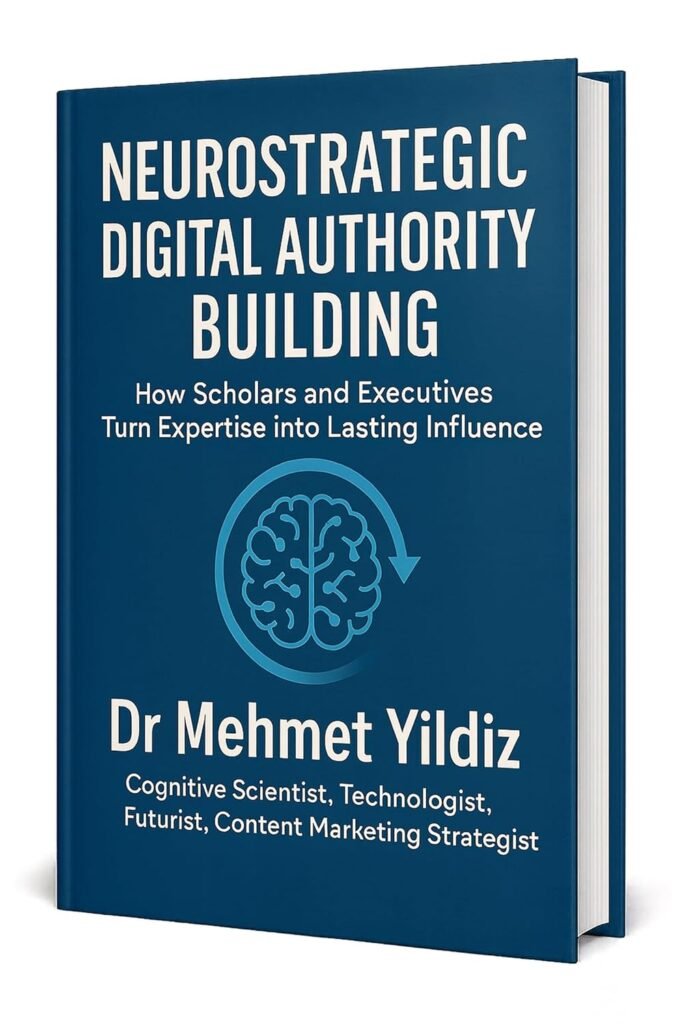
    I preordered the Kindle edition of Neurostrategic Digital Authority Building: How Scholars and Business Executives Turn Expertise into Lasting Influence.

    The book’s overall idea excited me because it resonated with both scholars and executives. Also, the title “Digital Authority Building” couldn’t keep me away. Most books on “personal branding” or “thought leadership” deserve a single skim, but this is to be read and reread.

    It is not a book about branding. It is a 460-page, 43-chapter argument about how the human brain decides whom to trust, and what that means for anyone whose career depends on being heard. As a coach working in Digital Economics, I’ve always wanted to hear what people on the other side decide neurostrategically.

    I want to explain why this book matters, what it actually contains, who should read it, and where I personally pushed back. I will also share my key takeaways from the book.

    The Most Misdiagnosed Problem: The Book Names

    Executives and academics have spent years building expertise. Many have already run departments, published research papers, and mentored people, but online, they are invisible. For academicians, their research journal might be their arena, and for executives, the organization is their playing field.

    Generally, you are advised to post more, be consistent, and build your personal brand. It is the same repetition you will hear from any creators, but people forget that key executives and academics cannot produce mass output or low-value work. Dr. Yildiz argues that this is a fundamental category error.

    According to Dr. Mehmet Yildiz, authority is not granted by output. It is granted by the audience’s brain, and the audience’s brain is governed by attention, trust, and memory, three faculties that have measurable rules.

    Many of us in the market do not understand these rules or what actually happens: more output creates more friction. This leads to investing time without creating influence.

    Dr. Mehmet Yildiz has created a community of 8,00,000 readers. When the book comes from his authority, the book cannot be overlooked.

    I really admire him because he has played various roles: a former IBM employee, a university educator, and now a writer and community creator.

    According to him, authority has taken a structural shift now. Previously, authority was in the titles you held and the credentials you carried. Now, in a digital environment where there is a continuous stream of voices, it is difficult to build your authority.

    The brain looks for clarity, relevance, and coherence, and continuously filters and evaluates. This is the diagnosis that runs through the entire book, and it is also why I think most existing books on “thought leadership” might look obsolete the moment you finish this one.

    What the Framework Actually Argues

    In chapter 13 Dr Mehmet shares “Defining Neurostrategic Authority Building: A Cognitive-Science Framework.”

    Here he introduces the framework formally, built on three cognitive layers I will paraphrase rather than quote.

    1. Attention as the gateway.

    2. The second is trust as the foundation

    3. The third is memory as the durability mechanism

    If you look at human attention, it is finite. You can look around and will see that most signals never enter conscious awareness at all. Your audience is dismissing that before evaluation. Authority is not what you say, but ideally, it is something that survives the filter.

    The second is trust as the foundation. Once the threshold of attention is achieved, the brain now shifts to a major question. Can this signal be relied upon?

    Dr. Mehmet shares that trust is developed through repeated exposure. It is very easy to destroy trust with inconsistencies in voice, tone, intent, and behavior. This is the part of the book I underlined most heavily, because it is also where most online experts fail. They optimize for attention and accidentally destroy trust in the same motion.

    The third is memory as the mechanism of durability. The brain retains very little of what it encounters. Research said we retain only 25 percent after 24 hours. Now, when the attention span is too low, the retention would be minimal. So people will forget your posts and even what they commented on.

    He treats memory consolidation as the missing leg of most authority strategies, and he is right.

    In Chapter 37, he formalizes these layers into what he calls the Neurostrategic Authority Loop™. According to him, it is a sequence that runs from focused attention through interpretation, trust, memory, retrieval, and decision, ultimately generating reinforced attention on the next encounter.

    This loop is the part of the book I will recommend to revisit again and again because it explains why authority compounds for some practitioners and stalls for others.

    Some of us are putting in a lot of effort, but it is not effort that compounds. It is the cognitive cycle that compounds when each interaction reinforces the previous one.

    What Makes This More Than Cognitive Psychology Repackaged

    Sometimes there is a risk in reading a book that claims to apply neuroscience to communication. This becomes interesting now because Dr. Yildiz is someone who is a post-doctoral researcher in cognitive science and a former Distinguished Enterprise Architect, and he has reportedly ghostwritten more than 100 books for senior executives.

    The framework reads like the consolidation of two careers, not the repackaging of a TED talk. Dr. Yildiz has also shared case studies in Chapter 31.

    He has shared real authority-building patterns.

    1. The prolific scholar whose name was known inside academia but absent outside it.
    2. The CEO, who outsourced his content to an agency, began to doubt that he had any unique perspective at all.
    3. The finance executive who became obsessed with LinkedIn follower counts, while internal surveys showed neither employees nor clients regarded him as a thought leader.

    Each case study extracts a specific failure mode of authority and ties it to a missing cognitive principle.

    In Chapter 33, he shares “Beware of Hope-Based Funnels.” Dr. Yildiz introduces the term Hope-Based Funnels to describe a category of digital monetization that operates within accepted marketing norms. The hope-based funnels exploit the brain’s processing of hope, urgency, and aspiration under economic stress.

    He draws on Daniel Kahneman’s distinction between fast and slow thinking to explain why these funnels convert. Dr. Yildiz notes that these funnels are designed to activate the intuitive system before the analytical system engages.

    He hasn’t shared any name, but if you have spent time in the online creator economy, you will recognize the pattern within two paragraphs. He shares what happens when visibility strategies prioritize emotional acceleration over cognitive alignment.

    In Chapter 38, “The Neurobiology of Authority,” he shares the neuroscience underlying the framework.

    Where the Book Is Strongest

    The book is strongest where it rejects the genre’s common shortcuts.

    Three things stood out to me.

    1. It does not promise virality. Instead, it actively warns against pursuing viral content because, by the book’s cognitive logic, virality is almost the opposite of authority. Virality is attention without trust, and attention without trust leads to low authority. This is also true, as many creators went viral but lost their influence.
    2. Dr. Yildiz, in the book, never said: “authority can be built in thirty days, sixty days, or any of the timelines marketed by online programs.” The model is to compound signals across years. The book carries the same temperament. There is no fast hack or cheat sheet to reward you with fast authority and cash
    3. The book is published through his own imprint, S.T.E.P.S. Publishing Australia, and reflects the author’s stated work as chief editor of more than twenty Medium publications, founder of a writing community with over forty-two thousand contributors, and Substack operator with hundreds of thousands of subscribers. When he discusses the mechanics of credibility signals, he is describing infrastructure he has actually built over the years.

    Where I Pushed Back

    The book is calibrated for an audience that already has substance. If you are a junior professional still building expertise and have no visibility for your framework, it will feel premature.

    Dr. Yildiz would agree with me. Authority cannot be neurostrategically built on top of an empty foundation, and the book assumes you have already done that work.

    The prescriptions are demanding for time-pressed executives. Chapter 15, on building an Authority Calendar, advocates for content distribution across multiple owned and earned platforms with consistent intellectual signaling over the years.

    I practically feel it is difficult for a CEO, dean, or department head with is already overloaded calendar. The book discusses solutions in Chapters 24-27, curated teams, multidisciplinary expertise, the role of a curator as a “linchpin,” and delegation without dilution.

    Personally, I would suggest that a leader with only 90 minutes a week can apply the principles over six months, which should have been shared in the book.

    As a coach who has implemented variations of this with my own clients, I can tell you that sequencing is where most attempts collapse. The framework is sound, and I believe the on-ramp could be sharper.

    What Changed in Me

    This is the part that comes from my learning. After reading the book, I realized writing for an algorithm is a bad idea, but writing for memory is the key. For about a year, I had been measuring my content’s performance on LinkedIn by impressions and engagement.

    After this book, I asked a different question:

    Will any reader still be able to recall the central idea of this post a week from now? Almost none of my old posts survived that test.

    I realized one thing – whatever I am publishing, how can I get into the memory of the ideal customer?

    Once, I had already lost 480k views on my Quora account. Now I treat my website, drashishjuneja.com, as the center and the platforms as feeders, not the other way round. This is, in fact, exactly the architecture the book advocates, and the architecture I am now teaching my own clients.

    The Chapter 23 discussion of cognitive scaffolding made me re-read my own published posts as a stranger would. I had been using dashes and overly formatted structures that, at times, mimic the visual grammar of AI-generated content.

    The book’s argument, supported by the neurobiology in Chapter 38, is that this kind of formatting actually increases cognitive load rather than reducing it. It signals noise, not clarity, to a discerning reader.

    The Five Themes I Am Anchoring My Own Work Around

    The clearest practical outcome of reading this book, for me personally, has been deciding what I am no longer going to write about and what I am going to commit to.

    Chapter 17 of the book argues that scattered messaging fails because the brain cannot encode patterns from noise. Your brain needs anchors.

    After working through that chapter and the surrounding material on cognitive scaffolding, I sat down and asked myself a harder question than usual. If a reader could only remember me for a small set of ideas, which ideas would I want those to be?

    The answer, after several drafts, came down to five:

    1. Digital Economics – the structural rules of how value is created, captured, and distributed in a post-industrial economy where distribution is free but attention is scarce.
    2. Demand Creation – how serious practitioners cultivate genuine demand for their work over time, as opposed to the hope-based persuasion patterns.
    3. Authority & Trust – the territory the book itself maps so carefully, and the territory I work within every day with clients.
    4. Value & Monetization – the practical translation of expertise into income, with the discipline to distinguish real value from the appearance of it.
    5. Conversion & Decision-Making — the cognitive layer of how people actually move from interest to action, and how to design for that movement honestly.

    I am sharing this not as a content marketing announcement but as an act of public commitment. Dr. Yildiz shares that 3-5 core themes should be decided and repeated for years and years until they become fixed in your audience’s minds.

    I even personally asked myself these questions.

    1. What is Justin Welsh known for?

    2. What is Dan Koe known for?

    3. What is Dr. Mehemt Yildiz known for?

    4. What is Siddharth Rajsekar known for?

    5. What am I known for?

    The book is correct in stating that themes function as cognitive anchors only when they are repeated across contexts and reinforced over time. I am putting these five on the record so that I am accountable to them, and so that readers know what to expect from me going forward.

    I will say honestly that Dr. Yildiz himself, in Chapter 39 of this same book, warns about the limits of repetition without depth, and I have taken that warning seriously.

    For me, the five themes is a commitment to a territory; the harder work, which I am still doing, is finding the one underlying argument that connects them. That work continues. This review is one step in it.

    Who Should Read It And Who Should Not

    If you are an academic, a senior executive, a senior consultant, or a serious independent practitioner who has accumulated genuine expertise and is frustrated that the digital world does not seem to know it, read it.

    If you have tried generic personal-branding advice and found it shallow.

    Read it if you suspect correctly that visibility and credibility are not the same problem.

    The Hope-Based Funnels chapter alone is worth the book’s price for anyone considering enrollment in an expensive online program.

    Do not read this book if you want a viral hook formula, a thirty-day plan, or a list of templates. It is not that kind of book. It will, in fact, gently insult that kind of expectation. It is a book for people who are willing to think slowly about something they intend to do for the rest of their working lives.

    A Final, Honest Word

    I should disclose two things plainly.

    1. Dr. Yildiz is a mentor of mine, and I have been on the receiving end of his coaching for more than a year, which gives me access and bias. I have tried, in this review, to be precise about what the book does well and where I struggled with it, because anything less would dishonor both the book and the relationship.

    2. I am also a working practitioner who analyzes and fixes the hidden bottlenecks in how money flows through your business. Some of what Dr. Yildiz argues, I had partially understood from my own work.

    If you have built genuine expertise and you want it to compound into lasting influence, this is the book to read this year. It is not a quick read. It is, deliberately, the opposite of a quick read. That is the point.

    Where to buy the book: Neurostrategic Digital Authority Building: How Scholars and Business Executives Turn Expertise into Lasting Influence by Dr Mehmet Yildiz (First Edition, April 2026, S.T.E.P.S. Publishing Australia, 460 pages, 43 chapters) is available on Kindle and through universal book links at books2read.com/neurostrategy. I bought my copy on Kindle.

    About Dr. Mehmet Yildiz: A post-doctoral researcher in cognitive science, distinguished enterprise architect, and author of more than forty books on technology, content strategy, and cognitive performance. His content ecosystem at digitalmehmet.com is itself a working illustration of the framework this book describes.

    About the reviewer: Dr Ashish Juneja teaches professionals, coaches, and senior independent practitioners to build digital authority and monetize their expertise. The five themes anchoring his future work —Digital Economics, Demand Creation, Authority & Trust, Value & Monetization, and Conversion & Decision-Making—are explored in depth at drashishjuneja.com.

  • The Ultimate Solution For Solopreneurs: Save Time, Stress, And Money Now

    The Real Struggles of Starting and Growing a Business Online

    Starting anything needs money. And sometimes much more than you thought.

    Getting attention online is like shouting in a giant stadium where everyone is already shouting.

    When you finally get someone’s attention, you realize something painful. You don’t know how to sell the right way.

    Making something good is not enough. You must learn to show, talk about, and convince people it’s worth their money.

    Even when you get some people interested, it’s hard to keep up with them. Sending emails, answering questions, and updating websites. You can’t afford a big team yet.


    You have to do everything yourself. Every big word, like SEO, automation, and analytics, sounds scary.


    Even when you try learning online, everything seems scattered and complicated.

    Like setting up a better website.


    Or figuring out advertising.


    Or understand why your email list is not growing.

    It feels like you need ten different brains to handle it all. But you only have one tired brain.


    A brain that’s already thinking about tomorrow’s tasks.

    And then there’s the fear of tech problems.


    If your website crashes or your payment link fails.


    You lose the trust of the few customers you have.

    Trying to fix those problems yourself feels exhausting. You know that you have to give up if your idea doesn’t work soon.

    Not because you want to. But because money, energy, and hope are not infinite.

    Sometimes it’s not about working harder. It’s about working smarter.

    But nobody shows you how to work smarter. And the world is full of people selling solutions to your problems.

    Many of them are not real solutions. Just promises that waste your time and trust.

    The Real Problem: Too Many Tools, Not Too Little Effort

    The Problem Isn’t Your Effort, It’s The Structure Around It

    I know you are ready to work hard to build your future.

    First, you will need a sales funnel builder.

    ClickFunnels charges $81 per month 

    Then you will need email marketing to talk to your customers.

    Mailchimp will charge you $13 per month.

    ConvertKit charges $25 per month.

    ActiveCampaign charges $15 per month.

    GetResponse also starts at $15 per month.

    AWeber charges $20 per month.

    Then you will need a website builder to show your products.

    Wix costs $17 per month.

    If you choose Shopify, it is $65 per month.

    WordPress hosting with Bluehost will cost you $9 to $12 per month. 

    You will need landing pages to convert visitors into customers.

    Leadpages charges $37 per month.

    Unbounce charges $74 per month.

    If you want to sell online courses, you will need special tools.

    Teachable charges $39 per month.

    Thinkific charges $49 per month.

    Podia charges $39 per month.

    To automate your work, you will need marketing automation tools.

    Kartra charges $99 per month.

    Builderall starts at $17 per month.

    You will need affiliate management to track your partners.

    Post Affiliate Pro charges $97 per month. 

    Tapfiliate charges $74 per month.

    You will need customer relationship management.

    You will also need social media marketing tools.

    Buffer charges $5 per social media channel per month.

    Hootsuite charges $99 per month.

    For professional templates, you will pay more.

    Envato Elements costs $16.50 per month.

    For better graphics, Canva Pro costs $46 per month.

    You might need better email deliverability services like Mailgun or SendGrid.

    They also charge extra every month.

    When you add all these expenses together, you will spend around $300 to $600 per month.

    Even at the lowest starting points.

    And remember, all these services come from different companies.

    They do not talk to each other easily.

    You will have to manage different logins.

    You will have to manage different bills.

    You will have to manage different customer support teams.

    They will only send you payment reminders.

    If you delay even once, they can block your account.

    This world of scattered tools is built for people with big money and teams.

    But if you are starting alone, if you are dreaming from scratch, it becomes a heavy burden.

    It eats your time.

    It eats your energy.

    It drains your hope.

    You are in the market to build something.

    A simple system.

    A system that saves your time.

    A system that saves your money.

    You need a platform where everything is in one place.

    Sales funnels.

    Email marketing.

    Website building.

    Affiliate management.

    Marketing automation.

    Online course building.

    Templates.

    Marketplace.

    All under one roof.

    One login.

    One customer support.

    One bill.

    No hidden charges.

    No extra stress.

    No running from one website to another.

    Operational Maturity: The Secret to Building a Business That Lasts

    Solving The Chaos Begins With Rebuilding The Core

    When a business grows, pressure grows.

    Pressure to deliver consistently.

    Pressure to handle more customers.

    Pressure to respond faster.

    Pressure to protect margins.

    Without a solid operational backbone, everything collapses under that pressure.

    According to Forbes, operational systems act as a “central administrative backbone” that makes businesses resilient against complexity.

    Without an operational structure:

    Information gets lost.

    Tasks get delayed.

    Customers get frustrated.

    Opportunities get missed.

    You don’t build a reputation through marketing alone. You build it with operational reliability.

    Consistent service. Consistent quality. Consistent delivery.

    That only happens if the back-end works like a well-oiled machine.

    Operational Efficiency = Financial Efficiency

    Efficiency is money.

    Every extra step in your workflow costs you time.

    Every lost customer email costs you potential revenue.

    Every duplicated effort costs you employee hours.

    HubSpot says businesses that improve operational efficiency can reduce operating costs by 30% within 12 months. 

    You are not competing against other humans only.

    You are competing against systems. Against AI. Against automation.

    If you do what technology can do automatically, you will always run slower.

    That’s why Systeme.io’s automation workflows matter.

    Not just because it’s “nice to have.”

    Because it’s critical for survival.

    You need systems that:

    Welcome new customers automatically.

    Deliver products instantly.

    Follow-up without reminders.

    Segment audiences precisely.

    Single Source of Truth = Faster Decisions

    Scattered systems create conflicting data.

    What your funnel says…


    What your CRM says…


    What your payment system says…


    If they don’t match — who do you trust?

    A full system ensures:

    Real-time visibility into leads, sales, deliveries, and customer behavior.

    Clear reports for weekly and monthly reviews.

    Strategic decisions backed by reliable data.

    Operational Focus Beats Market Fluctuations

    Markets will change.

    Tech will evolve.

    Trends will come and go.

    But the companies that survive are those that can respond operationally fast.

    When COVID came, the companies with weak systems collapsed.

    The ones with strong systems adapted, shifted, and even grew.

    In 2025 and beyond, speed and flexibility are survival tools.

    A full operational system is your armor against unpredictability.

    Systeme.io: Built To Be Your Full Operational System

    Systeme.io is not just another software.

    It’s a business architecture tool.

    Inside one dashboard, you cover:

    Marketing funnels.

    Payment processing.

    Customer relationship management.

    Email automations.

    Website management.

    Memberships and course hosting.

    Affiliate tracking.

    Blogging and SEO content.

    No need for separate Zapier bridges.

    No endless troubleshooting between different platforms.

    No runaway tech debt eating your bandwidth.

    Real Business Builders Don’t Gamble With Their Operations

    Professionals build operational systems.

    The man building a legacy doesn’t chase tools. He builds machines that run businesses even when he sleeps.

    And that’s what Systeme.io lets you build.

    A real machine. Not a fragile DIY patchwork.

    Where Communi.com Complements Systeme.io

    Selling once is not enough.

    Retention = Wealth.

    Communi.com gives you the operational muscle to:

    Build owned communities.

    Host live events.

    Offer exclusive memberships.

    Create deep client relationships.

    Together, Systeme.io + Communi.com create an operational structure that:

    Attracts → Converts → Delivers → Retains → Grows → Protects.

    And here is something to see: https://www.youtube.com/watch?v=goIDoSuMSE8

    Operational Maturity Is The Real Catalyst For Sustainable Growth

    Business punishes operational weakness harder than anything else.

    If you’re serious about building a company that lasts:

    Choose Systeme.io for a complete front-end and operational base.

    Choose Communi.com for retention and community building.

    Build your foundations so strong that no storm shakes you later.

    John’s Bakery used Systeme.io to automate orders, email marketing, and online sales — and grew faster without needing expensive separate tools.

    Business systems automate repetitive tasks. They free your mind so you can think like a CEO, not a technician.

    Systems give you power.

    Real power.

    Power to say no to nonsense work. 

    Power to focus on the real work that grows your business. 

    Power to work fewer hours but create bigger results.

    Operational Maturity: The True Engine Behind Sustainable Business Growth

    Don’t Buy More Tools, Invest In One System That Does It All

    Systeme.io is not a bunch of disconnected tools.

    It is one full platform that handles everything for you.

    It manages your marketing, sales, emails, automation, courses, and customers.

    You can do everything from one login.

    You do not need to open 10 tabs.

    You do not need to fix messy connections between tools.

    It starts with a Freemium plan at $0 each month.

    You get 2,000 contacts, 1 funnel, 1 course, 1 automation, 1 workflow, and unlimited emails.

    The next plan is the Startup plan at $27 each month.

    You get 5,000 contacts, 10 email campaigns, 10 funnels, 5 workflows, custom domains, and affiliate tools.

    Then there is the Webinar plan at $47 each month.

    You get 10,000 contacts, 100 campaigns, 20 workflows, webinars, and membership sites.

    The top plan is called Unlimited.

    It costs $97 each month.

    You get unlimited contacts, unlimited funnels, unlimited campaigns, unlimited automations, unlimited emails, and unlimited courses.

    Systeme.io also gives you a course builder inside.

    You can manage affiliates too.

    It connects with Stripe and PayPal.

    It gives you fast and safe page hosting.

    Other tools charge you $300 to $600 each month for all this.

    Systeme.io gives it all for under $100.

    Their support team is fast and real.

    FINAL WORDS

    In business, good intentions are not enough.

    Clear systems are required.

    Dreams collapse under the weight of poor operations.

    Dreams survive and grow under strong systems.

    Building a company is not an emotional act.

    It is an intellectual process supported by operational excellence.

    This is not about running harder.

    It is about structuring smarter.

    The companies that win in 2025 and beyond will not necessarily have better ideas.

    They will have better operations.

    Systeme.io lets you manage like a serious business, from day one.

    Communi.com gives you the tools to build and retain loyal customers.

    Together, they give you the stability to grow without running yourself into exhaustion.

    If you ignore operational structure, even the best marketing will eventually fail.

    If you master operations early, even in small steps, you give your business the chance to survive. Your business can thrive in any economy.

    If you want absolute freedom, Start with his 7-Day Challenge to build your business smarter, not harder.

    For deeper help, book a private consulting session with me.

    Want to Learn More First?

  • 4 Powerful Steps to Generate Leads (No Paid Ads!)

    4 Powerful Steps to Generate Leads (No Paid Ads!)

    Traffic and conversions are the most significant pain for any business on the Internet.

    You might be an excellent coach but have nothing if you do not have mentees.

    If you are an SBO (Small Business Owner), you need leads for your Business.

    The problem is that lead generation costs are high. Costs range from $1 per lead when it is FREE to $20 per lead when you charge $1 for a 3-day workshop. For working professionals and coaches, the biggest problem after creating a course or digital Product is how and where to sell it.

    91% of marketers rate lead generation as their #1 goal

    The problem with paid ads is that even if you spend money on leads, the quality of the audience is not good. They are cold leads who do not know about you, so there is no trust.

    If people like you, they’ll listen to you, but if they trust you, they’ll do business with you. – Zig Ziglar

    The average E-commerce conversion rate is around 2.35%

    As I have been a coach and worked with coaches and trainers, I know the problems and pains of coaches and Trainers.

    The general statistics:

    1. It takes approximately $1 to get a paid lead for a FREE course, program, or workshop.
    2. The mean cost per lead across all industries is $198.44

    3. Assuming You have generated 100 leads and have spent $100 on 100 leads – the showup rate will be 30 percent. (Assuming all are good leads.) The reality is not the same. The leads are not always good.
    4. Now, from 100 leads, you expect that 30 people will attend your FREE workshop or webinar.
    5. By the time you finish your workshop or webinar, assuming a conversion rate of 10 percent, at least three people will sign up for your course.
    6. If your course price is $33, you will break even in level 1.

    Don’t optimize for conversions, optimize for revenue. – Neil Patel

    The reality may still be different.

    The assumption of 100 quality leads is an assumption. They are cold leads who sign up when they see the ads, even without knowing they signed up.

    Embrace what you don’t know, especially in the beginning, because what you don’t know can become your greatest asset. It ensures that you will absolutely be doing things different from everybody else. – Sara Blakely

    In the past, as I was into coaching and training, I tried to call people to find out. They often replied that they were unaware they had registered for a webinar/workshop.

    As there is an auto-filled form on Facebook, people click and click but do not show up after registration.

    Now, if only 30 leads are fine and have some idea that they registered,

    Again, an assumption—30 percent will show up, i.e., nine people will attend your session. Assuming 10 percent is your conversion rate, your conversion is 0.90, and you cannot recover even your $100.

    How often will you have the rigor and enthusiasm to continue with $100 and make zero money from your expenditure?

    Coaches and trainers fail in their journey not because they are not good but because they cannot generate leads.

    You, as a coach/trainer, know your subject very well.

    You will deliver excellent Live and course content. When you have no leads/participants to whom you will deliver the course and make an impact.

    Content is the fuel for your lead generation efforts. – Dayna Rothman

    Master Traffic and Conversions

    The problem enlarges when someone who is not a good coach can make big money and laughs at you, saying, “You are no one. You are nothing and not making money.”

    I have faced all of these issues and say it from my experience.

    Someone good at sales and marketing and average in coaching and training may spit at you with his words.

    This impacts your self-confidence.

    The result of this is:

    1. You always think you lack sales and marketing.
    2. You believe you have created/improved your course to make it the best. This never happens. Once created, unless there is user feedback, it remains the same.
    3. You keep on going in circles and circles.

    Your mental state is that I am not getting students for my courses because I am not running ads.

    When you run ads, you make losses.

    This becomes a vicious cycle for you, leading nowhere.

    You keep watching marketers’ coaches grow even when you know you are better than them, but you cannot do anything.

    The worst part is when they demean you and brag about their revenue numbers.

    They even say, ” You know everything. You know more than me, but why are you not making money? Think about it. In the past XYZ years, I have made multifold money. Have you grown 2, 3, 5, or 20x? I have grown 20x. Why are you not able to grow? Think about it. You have a mental problem. You have a mental block. Even if I help you, you cannot grow because you have a mental block.”

    The above comment from someone makes you feel terrible.

    You have no choice but to repeat the cycles.

    Linkedin Growth Mastery

    While coaching various mentees, I saw the above problem and wondered how to help them with organic leads and traffic.

    68% of marketers say social media marketing has helped them generate more leads

    Recently, I helped a client attract 1000+ subscribers to their newsletter in a week and generate 10 K+ impressions.

    Also, we generated 150+ leads in 10 days, which is approximately 10 leads per day, all organically from LinkedIn.

    My client is a wealth coach who helps people grow wealth and come out of debt.

    He runs a 3 Days wealth accelerator Workshop.

    What I did was I created a quiz that had some questions like this.

    I started working on his branding.

    The goal was to create impressions and newsletter subscribers.

    For the last 14 days, I invested 1-2 hours on his LinkedIn account.

    I created replies to some posts. I ensured comments were valuable and not “Thank you for sharing. I liked it.”

    The comments came from personal life and personal stories.

    I know my client as I know his journey and personality.

    Steps I followed daily:

    1. Engage with 2-3 people every day with meaningful comments on the post.
    2. Post the content that has worked well on the video. I used the down sub to get captions. After downloading, I rewrote the post to make it engaging and lively. This way, there was content on the profile every day.
    3. I posted the same content in various relevant groups to get traffic and impressions.
    4. Utilized the challenge creation tool strategically inside the posts. You Can Create Your FREE Challenge / Quiz here.

    This process has helped to generate approximately 10 warm leads per day.

    In the value of the number, the project in 14 days has generated approx.

    At the time of writing, the process has generated approximately 120+ leads with a minimum value of $240, or $2 per lead.

    Out of the above leads, 30 percent have registered for the webinar- this makes the value of the registered leads = 40 x $20 = $800

    So, all in all, this process has generated $1000 worth of Leads.

    Bonus

    1. 1100 Newsletter Subscribers
    2. 11k + Impressions

    To get the approx value of the above – I asked perplexity this question

    The answer received is – the total value of 1,100 newsletter subscribers and 11,000 impressions is approximately $33,079.09.

    I also achieved the second-highest impressions on his profile in the past 365 days.

    It seems a significant achievement that in the past 14 days, only the second-highest impressions on a post came to his profile.

    The Entrepreneurial Readiness

    As a Digital Economics Coach, I understand your challenges with lead generation. The high cost of low-quality paid leads can be frustrating.

    I have developed an Organic LinkedIn growth Strategy, generating over 200 quality leads in 14 days.

    LinkedIn Lead Generation Mastery

    I’m offering a comprehensive program to help coaches and small business owners replicate this success.

    Take the FREE Entrepreneurial Quiz and check how ready you are.

    You will also get a FREE course – 7 Days to Digital Business.

    I am also offering a LinkedIn Lead Growth Mastery, a comprehensive program that helps coach small business owners and professionals to replicate this success.

    You can book a discovery call to find more details. Don’t let another day go by struggling with expensive, low-quality leads. Transform your LinkedIn presence and start attracting the right clients organically.

    Book your discovery call now.

    Summary

    Coaches, Trainers, and Small Business Owners struggle with expensive, low-quality leads. With the LinkedIn growth approach, quality leads can be generated in a few days.

    The key elements are:

    1. Personal Brading
    2. Daily Engagement
    3. Repurposing the content
    4. Content sharing
    5. Use of content creation tools strategically.

    The above process can generate a few leads per day.

    Conclusion

    A linked growth strategy can be a good alternative to traditional paid advertising. By leveraging personal branding and content marketing, quality leads can be generated.

    The leads can fill the webinars or workshop rooms, increasing the newsletter subscribers and leading to LinkedIn growth.

    The result is not only immediate but also long-term brand-building and audience engagement.

    According to the question asked from perplexity, the estimated value of the above is $33,079.09 for newsletter subscribers and impressions plus long-term impact.

    LinkedIn strategy builds authentic connections and showcases expertise to build qualified connections, impressions, and leads without the financial burden of paid ads.

    Take the FREE entrepreneurial Quiz and FREE 7-day Digital Business Course. If you want to enhance your online presence and generate leads, start with a FREE entrepreneurial quiz.

    With the evolving landscape of digital marketing, authenticity, and engagement work. Value-driven content can help you achieve success. Adopting the above strategies can transform your online presence and build a profitable Business model.

  • Unlocking the Value of Graphy

    Unlocking the Value of Graphy

    Discover the full potential of Graphy.com with our comprehensive guide! Learn about pricing options, explore key features, and uncover how this innovative learning platform can elevate your educational journey. Dive into the world of Graphy today and revolutionize the way you learn!"

    The biggest gift that a coach has is to share the knowledge with the world. The world of coaching, training and online entrepreneurship is really dynamic. 

    Whether you are a seasoned coach, budding entrepreneur and eager to build an online presence around your chosen niche, you need the right tool. 

    There are many tools available for content creators to host their courses on like Thinkfic, teachable, unschooler and many other LMS (Learning Management System).

    Skyrocket your coaching journey with one of the best LMS, the Ultimate platform for Coaches, Trainers, Educators and aspiring online Entrepreneurs. Let’s unlock the value of Graphy as a tool exploring the Pricing, Features, and Benefits of the Innovative Learning Platform.

    If you are confused which is the right LMS for you to upload your courses, consider this LMS as your ultimate friend in knowledge, innovation and professional development. 

    Navigating the landscape of Online Entrepreneurship

    When you are a coach or pursuing your online entrepreneurship, adaptability, innovation and connecting with your audience is very important. From personal development coaches and fitness trainers to business mentors and lifestyle gurus, the demand for digital content and virtual services continues to soar, presenting unprecedented opportunities for growth and expansion.

    When the market is flooded with a lot of tools and platforms, choosing the right platform is important for you. Graphy is a revolutionary platform to empower coaches, trainers and aspiring entrepreneurs in the digital landscape.

    I am assuming you have expertise, Or you are planning to share your newly learned expertise, for example, affiliate marketing. What is the best way to share?

    The Powerhouse for Building and Selling Your Online Courses

    The best way to share your expertise is through courses and for this, Graphy can be your ideal companion. 

    What makes it different for launching your online course empire?

    What is Graphy?

    It is a robust, all-in-one course creation platform designed to empower educators, content creators, and entrepreneurs. It provides all the tools you need to develop, market, and sell compelling online courses—all – all under your own brand. 

    It stands out with its emphasis on creator independence, flexibility, and affordability.

    Key Features of Graphy by unacademy

    • Intuitive Course Builder: Easily structure your lessons using video, audio, text, images, downloads, quizzes, and assignments.
    • Customizable Website & Mobile Apps: Get your own branded website and mobile apps (Android & iOS) to provide a seamless learning experience for your students from anywhere.
    • Sales & Marketing Tools: Create landing pages, offer flexible payment plans, run promotions, provide coupons and discounts, and leverage affiliate marketing features.
    • Community Engagement: Foster interaction and a sense of community with discussion forums, live chats, Q&As, and other social elements.
    • Data Analytics: Track student progress, course performance, and sales metrics to gain valuable insights and optimize your offerings.
    • Integrations: Connect Graphy with popular email marketing, analytics, and payment tools.

    Explore Graphy

    At the heart of Graphy.com lies its extensive library of courses, curated to cater to the diverse needs and interests of coaches, trainers, and aspiring entrepreneurs. Whether you’re looking to enhance your coaching skills, develop your online presence, or launch your own digital business, it offers a wealth of opportunities to explore, learn, and grow.

    If you are a creator like me and want to expand your expertise consider it for any domain / discipline from leadership development to mindfulness strategies. It is niche neutral, and you can launch your course in any niche.

    The platform is interactive with  lessons, practical exercises, and real-world case studies so that your students / mentees can gain invaluable insights and tools. This way you can create a deep impact on your students.

    Whether you’re looking to launch your own online course, monetize your expertise, or build a thriving online community, the LMS equips you with the knowledge, strategies, and resources to turn your entrepreneurial dreams into reality.

    Why Choose Graphy?

    • Ease of use: It is user-friendly interface makes building and managing your online courses remarkably intuitive, even for those without extensive technical experience.
    • Affordability: It offers transparent and competitive pricing plans.
    • White-Labeling: Build a strong brand identity with your custom website and mobile apps powered by the Graphyapp.
    • Ownership & Control: Retain full control over your content, student data, and pricing with this LMS.
    • Creator-centric: It prioritizes the needs of independent creators, providing the tools for success without sacrificing autonomy.

    Graphy Pricing: Affordable Access to Premium Education

    The key feature of this LMS is accessibility and affordability. Flexible pricing options are tailored to suit individuals needs and preferences. 

    Let no financial constraint stand in your way. With the traditional LMS asking for 36 – $199 a month, it takes a lot of money if you are starting out. Teachable pricing starts from $59 a month if you are on monthly mode. 

    Thinkfic starts at $49 a month if you are on monthly mode.

    With this learning management system you can start for FREE or take Rs. 19000 launch program to start with. 

    If you use my affiliate link you will get a special deal for 3 years. 

    With annual membership, it offers exceptional value for money, granting unlimited access to its entire library of courses, resources, and community features. 

    Furthermore, the LMS transparent pricing policy ensures that users know exactly what they’re paying for, with no hidden fees or unexpected charges.

    For those hesitant to commit, it also provides a selection of free courses and resources, allowing coaches and entrepreneurs to sample the platform’s offerings before making a decision. So you can start for free on graphy.com

    This commitment to accessibility is to empower you to pursue your passions and aspirations with confidence and conviction.

    Introducing the GraphyApp: Learning on the Go

    With most of the content watched on mobile these days – the app enables coaches, trainers and entrepreneurs to have access anytime, anywhere directly on smartphone or tablets. 

    Whether your student / mentee is travelling or simply taking a break, the app allows seamless learning, syncing the progress across devices.

    With its intuitive interface, offline capabilities, and personalized recommendations, the App ensures that learning is not confined to the constraints of a traditional classroom or desktop computer. 

    It empowers your students / mentees to learn at their own pace, on their own terms, deep diving into the world of knowledge and inspiration on fingerptips.

    Joining the Graphy Community: Connecting, Collaborating, and Growing Together

    As a coach, you understand the importance of community. Through forums, discussion boards, and live sessions, users can connect with like-minded individuals, share insights, and seek advice from industry experts and thought leaders.

    Whether you’re providing mentorship, feedback, or networking opportunities, the Platform community provides a supportive and collaborative environment for professional growth and development for your mentees. By fostering connections, facilitating collaboration, and nurturing talent, The platform empowers coaches, trainers, and entrepreneurs to transcend boundaries, unleash their creativity, and forge meaningful relationships that enrich their journey towards success.

    How to Get Started on Graphy?

    1. Sign Up: Head to www.graphy.com and create a free account.
    2. Build Your Website or Mobile App: Use intuitive customization tools to create a professional online presence that aligns with your brand.
    3. Create Your Course: The course builder guides you through structuring your lessons and uploading multimedia content.
    4. Set Your Prices: Choose price structures and payment options that work best for you, including the ability to offer bundles and subscriptions.
    5. Market & Launch: Promote your course using built-in marketing features, social media channels, and your own network.

    Is Graphy the Right Platform for You?

    If these characteristics resonate with you, then the platform is an excellent contender for your online course business:

    • Prioritizing your brand: You want to establish a strong, undone brand for your educational content. The platform helps you to customize the course link on your domain. For example, I have mine on digitaleconomicshub.com.
    • Flexibility: You prefer ample control over your courses, pricing, and student interaction. You can set preview time, membership and many other things on the platform.
    • Ease of use: A streamlined, user-friendly platform is essential for you.
    • Value for money: You’re seeking powerful features at a reasonable price.

    Ready to Transform Your Knowledge into a Thriving Business?

    The platform empowers creators of all levels to build, market, and sell exceptional online courses. Explore the platform, take advantage of their resources, and unlock the potential of the booming online education industry.

    Empower Your Coaching Journey with Graphy.com

    I have personally used teachable.com and have paid $59 a month for a few months, but the minimum $59 a month when you are starting out can be on the higher side. 

    I would like to be on the platform where the monthly commitment is low. 

    Currently, the platform offers an annual subscription for Rs. 19,999, which translates to $239 per annum. This breaks down to a monthly cost of $19. If you get a special deal for 3 years, the monthly price comes down to $6.6 per month. Where exactly will you find this kind of deal with world-class LMS?

    Only one negative point I see with graphy.com is 10% revenue share per sale on the Launch plan and 5% revenue share per sale on the Rise plan. 

    If you choose the Emerging creators program, you will be able to go away with this revenue sharing model. Teachable is also charging a 5% transaction fee for a $59 a month plan. Thinkfic has a 0 percent transaction fee.

    In conclusion, Graphy.com emerges as a game-changer in the realm of coaching, training, and online entrepreneurship, offering a comprehensive suite of tools, resources, and community features to support your professional growth and development. 

    Whether you’re looking to enhance your coaching skills, launch your own digital business, or connect with like-minded professionals, this LMS provides the knowledge, inspiration, and support you need to thrive in today’s competitive landscape.

    Do not wait. If you want a special deal on Graphy click on the link and share the details. Someone from the team will reach out to you. 

    Empower your coaching journey with an online learning management system– because your success starts here.

    I’m waiting to hear from you.

  • How One Take AI-Enabled Video Production Saves Time

    How One Take AI-Enabled Video Production Saves Time

    One Take AI image created by Dr Ashish juneja using canva

    If the mere thought of video editing makes you break out in a cold sweat, you’re not alone. But what if there was an easy Video editing AI solution that could turn raw footage into polished, share-worthy videos with practically zero effort?

    Enter the revolutionary tool that’s all about simplifying the video editing AI process. By far I have seen so many pieces of software but this ai-enabled video production is class apart.

    For long, I have been creating content for various social media so that it can bring visibility to me. The only thing that stops me from creating a lot of content is editing.

    Although I am not an amazing fan of editing, looking at the videos of others makes me feel inferior. There is always an inferiority complex when it comes to videos of others.

    I even tried giving the video editing work to people on Upwork and Fiverr, but it did not work out well.

    I came across this tool on an online marketplace called AppSumo. I have my tools in a pack from this online marketplace where I can find lifetime deals. Here Solopreneneurs like me or people with small teams bring their tools and resources to share with others and get their initial set of customers.

    Are you interested in learning about this amazing tool?

    Let’s get started

    AI-Enabled Video Production

    • AI-Powered Cleanup: Say goodbye to “ums,” awkward pauses, and distracting background sounds. OneTake cleans up your audio like a pro.
    • Automatic Editing Wizardry: With a single click, OneTake adds smooth transitions, eye-catching text overlays, and even background music if you choose – giving your videos an instant professional upgrade.
    • Subtitles and Translations: Reach a global audience by easily adding subtitles and translating your videos into multiple languages.

    My “Aha!” Moment with Video editing AI

    I used to spend HOURS editing a simple talking-head video. With OneTake, I had a finished product ready to share in minutes. Sure, I make minor tweaks sometimes, but the time savings alone made it a game-changer. Even better, the quality boost meant more engagement and new followers!

    Pleae check this link to see how it can convert the video

    Why One Take AI is Ideal for Content Creators (and Busy Entrepreneurs)

    This tool is ideal for:

    • Content creators who want polished videos without the editing headache.
    • Business owners really need help with creating marketing videos because they are not very good at using technology.
    • Course instructors who want engaging video lessons quickly.

    If you’re nodding along, there’s a good chance this tool is a great fit. But what about those “what-ifs?”

    • “The price seems steep…” Think about how much your time is worth, and how better videos could impact your business.
    • “I’m worried about a learning curve…” the tool is remarkably intuitive. Plus, their support team is helpful if you do get stuck.

    OneTake AI -Enabled Video Production vs Vimeo

    While Vimeo is good, One Take AI wins in the ease-of-use category. The interface is simpler, and the AI handles more of the heavy lifting, making it ideal for total beginners.

    Your Transformation Starts Here

    If you’re ready to ditch video editing overwhelm and create standout content with ease, One Take AI is worth checking out.

    See OneTake AI-enabled video production in action!

    Let’s Chat!

    Have you tried OneTake AI? What are your favorite easy video editing tools? Share in the comments below!

    Try OnetakeAI for FREE

    Affiliate Disclosure: I truly believe in the power of OneTake AI. To keep creating helpful content, I use affiliate links. If you decide to purchase through my link, I may earn a small commission – thank you for your support!